
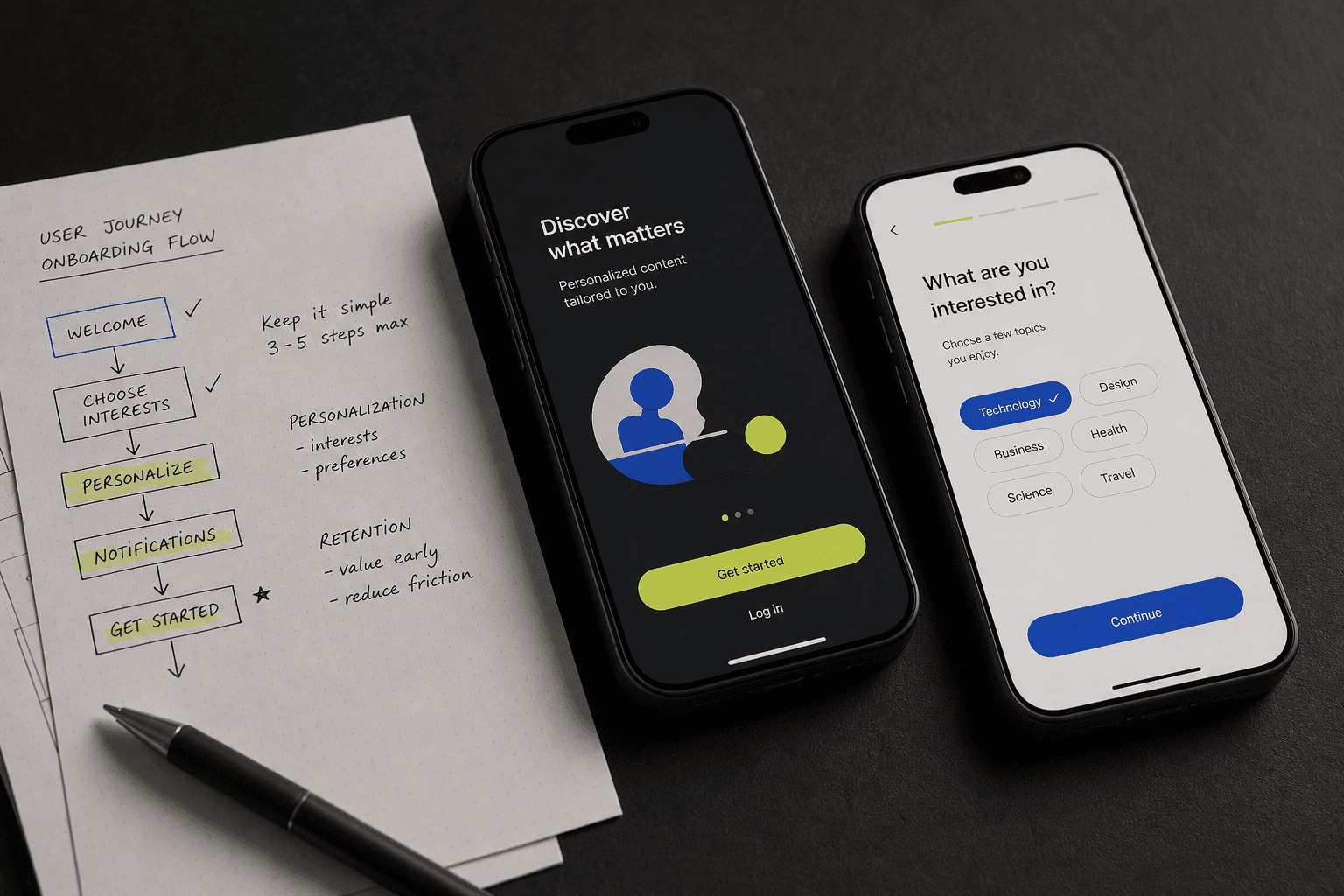
People stop using mobile apps when the effort required to reach value is greater than the value they can see. The problem appears in retention reporting, but its causes may begin in the proposition, onboarding, performance or everyday navigation.
Early retention is not solved by sending more notifications. Teams need to understand the first useful outcome, remove unnecessary barriers, and make the product dependable enough to earn another visit.
The core problem: promise and experience do not match
Acquisition creates an expectation. A store listing, advert or recommendation suggests a particular benefit. If the opening experience leads with a long tour, forced registration or unrelated features, the product delays the reason the person installed it.
This mismatch can also come from scope. When an app tries to serve several audiences at once, the first journey becomes generic. Users must determine which features matter before the interface has earned their attention.
Define the first useful moment
The first useful moment is the earliest point where a person experiences credible progress toward a goal. For a finance product, it might be seeing a clear account position. For a planning tool, it may be organizing the first task. It should describe user value, not completion of onboarding screens.
A capable mobile product process defines this moment before polishing flows. Product, design and engineering can then judge each step by whether it helps users reach value safely and confidently.
Use onboarding to enable action
Onboarding should collect only what the product needs and explain unfamiliar choices when they become relevant. Feature tours are quickly forgotten because users have no context. Guided action is usually more useful.
Account creation deserves scrutiny. Some products require identity, security or cross-device continuity before use. Others can allow exploration first. When registration is necessary, explain why, preserve progress and make recovery straightforward.
Ask for permissions in context
Location, contacts, camera and notification access are significant requests. Asking for all of them at launch can feel intrusive before the product has shown value. Request access when the related feature is used and explain the benefit plainly.
A refusal should not create a dead end where an alternative exists. Permission states also need testing after operating-system changes because a journey that works in the ideal case may fail for returning users with different settings.
Protect performance and reliability
Slow startup, frozen controls, lost input and unresolved crashes undermine confidence quickly. Mobile conditions vary across devices, available storage, networks and system versions. Testing only on recent development devices hides the experience many customers receive.
Focus performance work on startup, authentication, core data loading, search and transaction confirmation. Clear loading, empty, offline and error states help users understand what is happening when immediate completion is impossible.
Keep navigation and interface state clear
People need to know where they are, what changed after an action, and how to recover. Inconsistent navigation, hidden gestures and ambiguous icons increase what users must remember. Familiar patterns are valuable when they support the task.
Product experience design should cover more than ideal screens. Interrupted flows, invalid input, revoked permissions, expired sessions and empty accounts are part of the product. These states often decide whether the app feels dependable.
Improve the product after launch
Notifications are useful when they communicate timely value chosen by the user. They become damaging when they compensate for weak value or pursue engagement without context. Frequency controls, clear preferences and accurate destinations respect attention.
Launch creates evidence, not completion. Review journey breakdowns, support themes and reliability, then speak with users where analytics cannot explain behaviour. Common mistakes include adding onboarding copy instead of simplifying the flow and running acquisition while known bugs remain unresolved.